
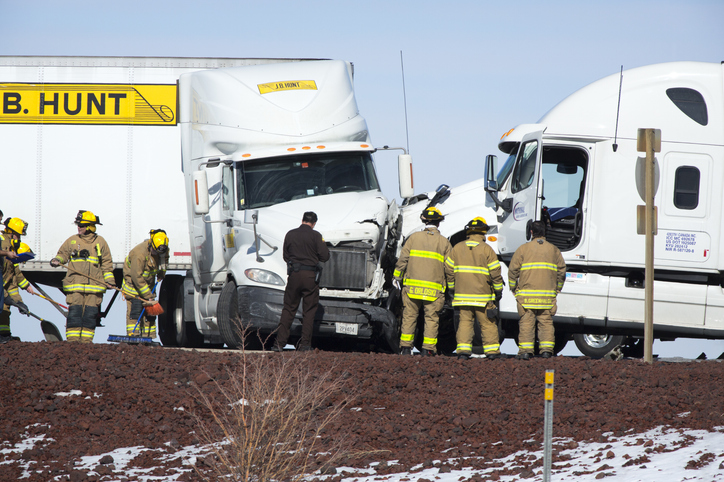
According to the most recent statistics available from the National Safety Council, in 2023, 5,375 large trucks were involved in a fatal crash. This is an 8.4% decrease from 2022 but a 43% increase in the last 10 years. Also in 2023, 114,552 large trucks were involved in crashes resulting in an injury. Large trucks are defined as any medium or heavy truck, not including buses and motor homes, with a gross vehicle weight rating greater than 10,000 pounds.
Moreover, the cost of a trucking accident is astronomical. According to 2024 FMCSA data, average costs for accidents involving fatalities exceeded $14.5 million per crash, average costs for accidents involving injuries were more than $385,000 per crash, and non-injury crashes resulted in around $46,000+ per crash.
In our “Claims Series,” we will discuss what best practices to follow in the event of an accident involving one of your trucks. In this article, we review why it’s critical to report an accident immediately.
Don’t Wait to Report an Accident
Immediate accident reporting is one of the most important actions a trucking company can take after a loss. The moments and hours following a crash are critical for preserving facts, protecting drivers, and controlling the ultimate claim outcome. Delays, even unintentional ones, can significantly complicate the claims process and increase both financial exposure and legal risk.
Early Reporting Enables Immediate Investigation
Early reporting allows insurance companies and claims professionals to begin investigating while the evidence is still fresh. Skid marks fade, debris is cleared, vehicles are repaired or towed, and witnesses’ memories change quickly. Prompt notice enables timely scene investigations, vehicle inspections, driver statements, and witness interviews, often the difference between a defensible claim and one that escalates unnecessarily. When facts are incomplete or lost, insurance carriers may be forced to rely on third-party narratives, which are not always favorable to the insured.
Timely reporting also plays a significant role in determining liability and claims strategy. Early involvement allows claims teams to identify potential defenses, evaluate comparative negligence, and deploy accident reconstruction experts when appropriate. Late reporting, on the other hand, can raise red flags or limit an insurer’s ability to defend the claim fully. In some cases, delayed notice can even jeopardize coverage under the policy.
Prompt Reporting Helps Support Medical Care Management
Immediate reporting also helps manage medical outcomes and costs. Early coordination ensures injured parties receive appropriate care, helps prevent inflated medical bills, and allows insurance carriers to monitor treatment from the outset. For drivers, this can mean faster access to medical guidance, reduced downtime, and clearer documentation of injuries.
Prompt accident reporting supports regulatory compliance and protects the long-term health of a trucking operation. Accurate, timely reporting helps ensure FMCSA requirements are met, CSA scores are managed appropriately, and internal safety programs can address root causes before patterns develop. It reinforces a culture of accountability and preparedness, one that not only reduces claim severity but also positions fleets more favorably with insurers, underwriters, and regulators.
Reporting trucking accidents promptly is a critical risk management tool. In the next installment of our “Claims Series,” we’ll explore what information should be gathered at the scene of the accident.
About Western Truck
Western Truck Insurance Services is an insurance brokerage specializing in commercial truck insurance. We know this stuff and want to ensure you do, too. Our clients appreciate our dedication to finding competitive rates and providing unparalleled service, complemented by excellent insurance options. They also value how our state-of-the-art automation provides lightning-fast truck insurance quotes, customer service, insurance certificates, and coverage changes. Contact us today at (800) 937-8785 to learn more.